From powerful eye‑catchers to botanical and contemporary types, Celosia offers a wide range of possibilities for use in pots and in the garden.
Celosia is increasingly developing into a broadly applicable and commercially attractive seasonal crop. The assortment allows for intense colour use, refined shades and natural forms, combined with strong plant performance, good logistical holding ability and long ornamental value. This makes Celosia particularly attractive for trade and retail seeking differentiation, while keeping the risk of shrinkage and waste on the shelf to a minimum.
This spring, the varieties Deep Purple®, Mystic Shades™ and Wild Pink®, among others, are highlighted. Together, they demonstrate how versatile and reliable Celosia can be applied, from transport through to final presentation.
Deep Purple®: powerful colour, reliable quality
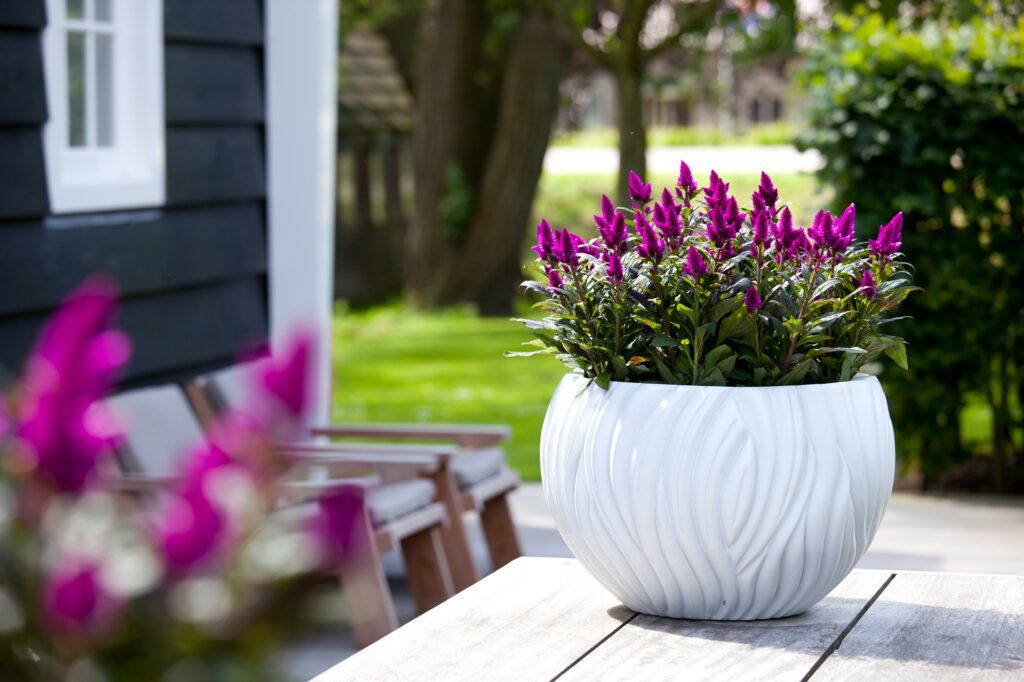
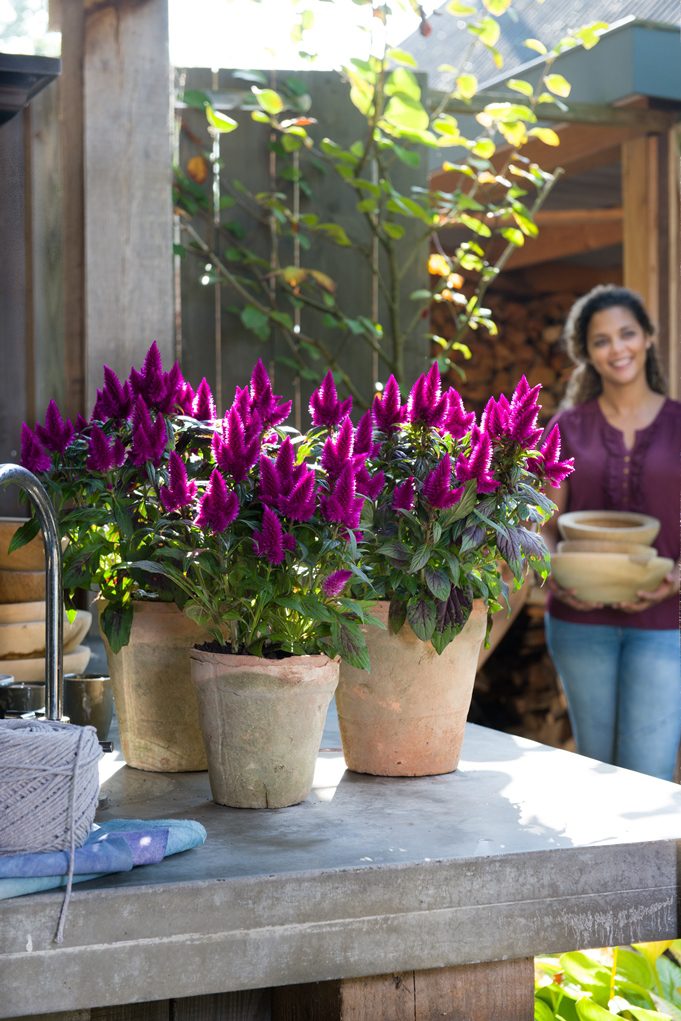
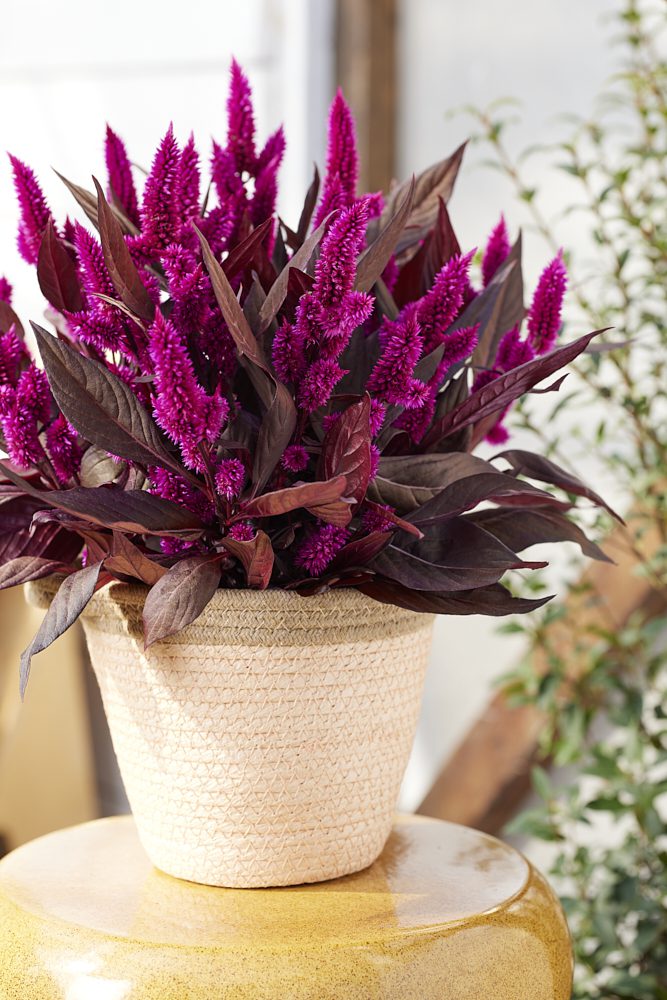
Celosia Deep Purple® stands out for its exceptionally intense, deep purple colour and high ornamental value. The robust flower plumes retain their colour for a long time and create a strong visual impact in pots and borders. Thanks to its solid plant structure and long ornamental value, this variety performs reliably throughout the entire chain, from cultivation to final presentation. Deep Purple® therefore offers clear added value for growers, trade and retail.
Mystic Shades™: a refined play of purple tones
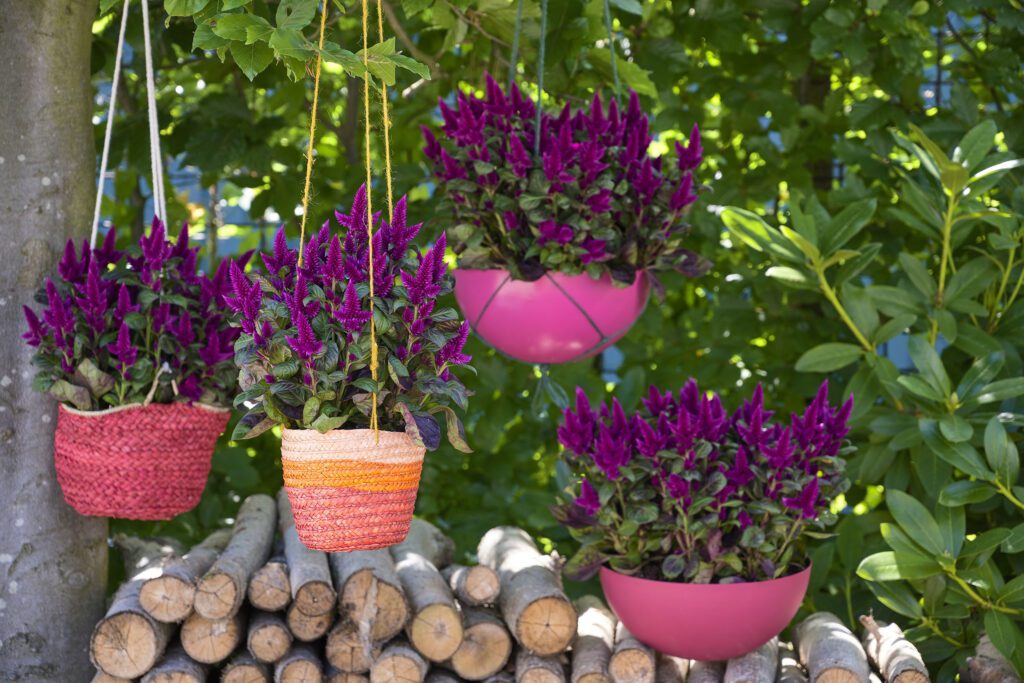
Celosia Mystic Shades™ is distinguished by its remarkable depth of colour, with two shades of purple visible within each flower plume. This subtle variation gives the plant a refined and expressive appearance, enhanced by the contrasting dark foliage. The rich, mystical colour palette aligns well with current trends in outdoor spaces, where atmosphere, depth and expression play a central role.
Wild Pink®: natural and expressive
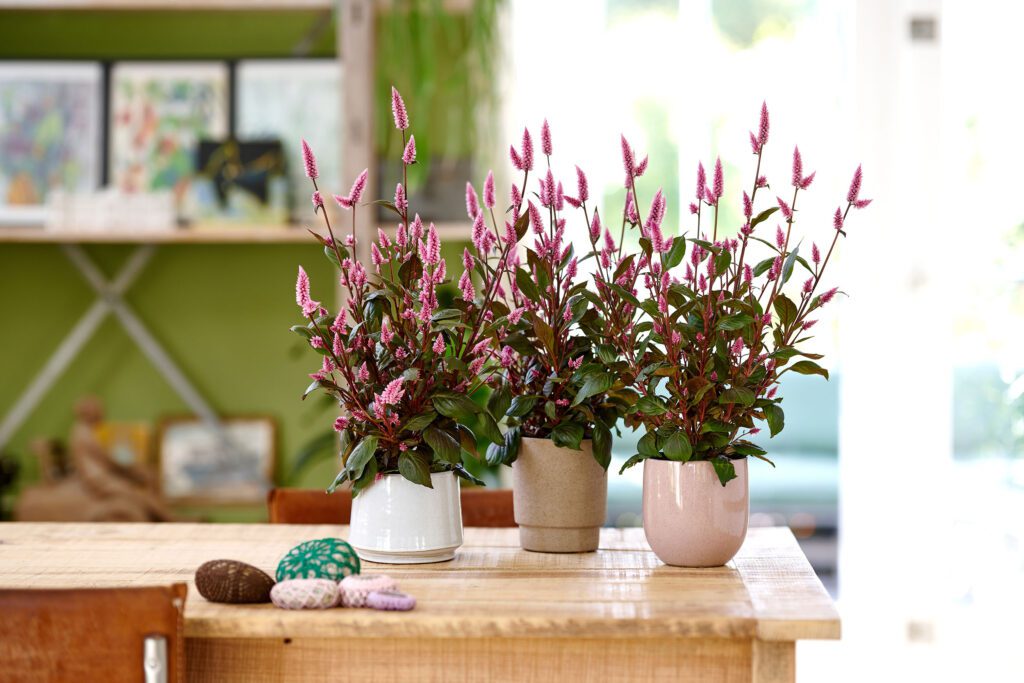
Celosia Wild Pink® is characterised by lush, natural growth and deep dark‑pink flower plumes. With its botanical appearance, this variety responds to the trend towards more natural and informal garden design. Wild Pink® performs excellently in the garden, as well as on terraces and balconies. In addition, Celosia is attractive to pollinators such as bees and butterflies, making this variety particularly relevant for green and biodiversity‑oriented plant concepts.